

Kennedy Center Expansion
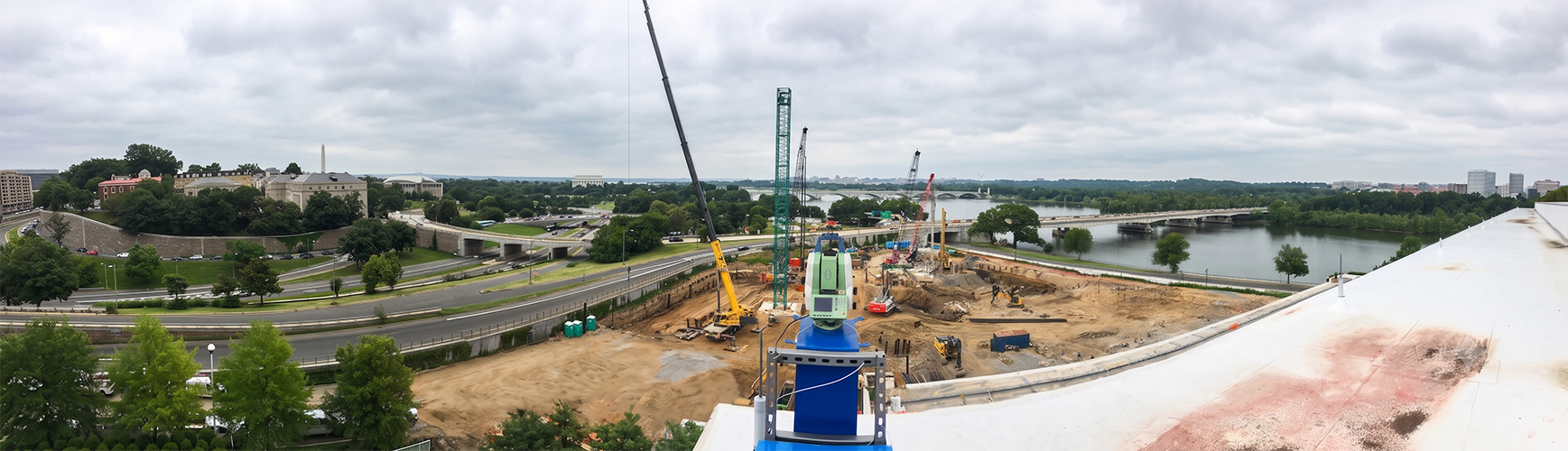
Monitoring a Landmark During Complex Urban Construction
The John F. Kennedy Center for the Performing Arts in Washington, DC, underwent a major expansion at its south end with the construction of The REACH, adding three new pavilions and a pedestrian bridge while extending the campus toward the Potomac River.
The project involved demolition, excavation, and heavy construction activities immediately adjacent to the existing Kennedy Center, the Roosevelt Bridge ramp, and underground DC Water infrastructure. At the same time, a separate DC Water project was constructing a deep diversion shaft below the site as part of the Clean Rivers Project.
With two major construction projects taking place simultaneously in a constrained urban environment, continuous monitoring was required to detect movement, settlement, deformation, and vibration that could affect existing structures and infrastructure.
Monitoring Requirements
GEO-Instruments was contracted to provide automated monitoring for both the Kennedy Center expansion and the adjacent DC Water project.
The monitoring program was designed to:
- Detect movement and deformation of the existing Kennedy Center and parking structures during demolition and excavation
- Monitor the Roosevelt Bridge ramp and excavation support system
- Measure potential settlement and changes in tilt
- Monitor vibration generated by construction activities and rock excavation
- Provide early warning of movement or vibration exceeding established limits
- Deliver continuous monitoring data to project teams for timely assessment and response
The monitoring program operated from late 2015 through mid 2017 and included more than 200 monitoring points across multiple areas of the site.
Monitoring System
GEO installed multiple Automated Motorized Total Stations to provide continuous optical monitoring of strategically located prisms on the Kennedy Center, Roosevelt Bridge ramp, and excavation support structures.
Additional instrumentation included tiltmeters, hydrostatic level cells, wireless multi point borehole extensometers, and automated vibration monitors. Measurements were collected at regular intervals and transmitted automatically to dedicated GeoCloud project websites, where project teams could access current conditions, alarms, graphs, and reports.
Some monitoring systems served both construction projects, while measurements were maintained separately and delivered through dedicated project websites for each scope.
One of the unique challenges was the installation of an Automated Motorized Total Station on the roof of the Kennedy Center. Because the building's historic Carrara marble could not be drilled or otherwise penetrated, GEO developed a non invasive gravity base using concrete masonry blocks and cable restraints. The system was engineered to withstand hurricane force winds while keeping the instrument securely positioned without attaching it to the building.
Monitoring Results
Continuous automated monitoring provided the project teams with a detailed record of structural behavior throughout construction.
During periods of cold weather, the monitoring data revealed a consistent movement pattern across the existing parking structure. Prisms on opposite sides of the structure moved in different directions, creating a fan shaped pattern that initially appeared unusual.
Because the movement was continuously tracked and could be compared with temperature changes, the monitoring data demonstrated that the displacement was caused by normal thermal contraction at the structure's expansion joints rather than structural distress.
The movement was small, repeatable, and reversed as temperatures recovered.
This project demonstrated the value of continuous automated monitoring in complex construction environments. By combining multiple monitoring technologies with real time data management, GEO-Instruments provided the information needed to distinguish expected structural behavior from potentially concerning movement and helped project teams proceed with confidence while construction continued around a sensitive and iconic structure.
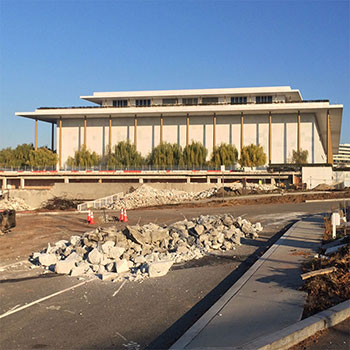
The John F. Kennedy Center for the Performing Arts undertook an expansion project at its south end, adding three pavilions and a pedestrian bridge.
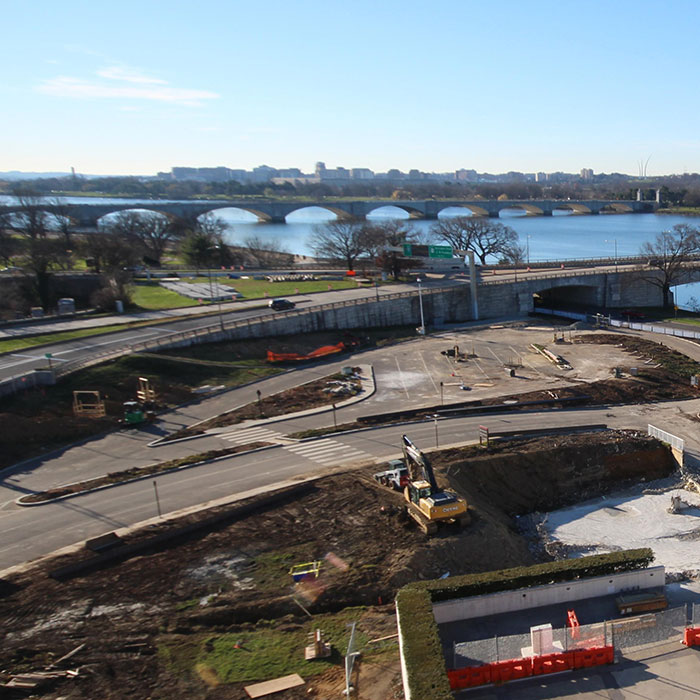
The work involved demolition, excavation, and other construction activities that could affect the Kennedy Center, the Roosevelt Bridge ramp, and the underground DC water utilities.
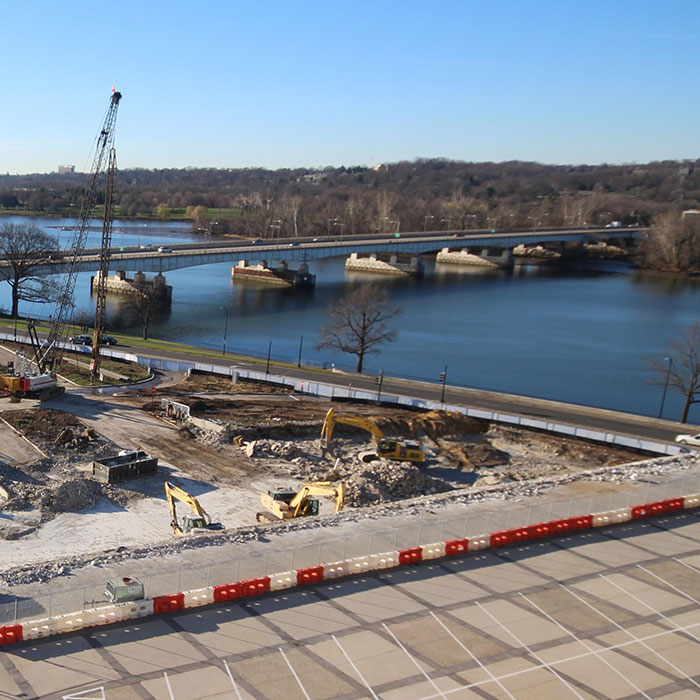
Early on in the project, GEO-Instruments installed a monitoring system to provide early detection of structural movements or excessive vibration from the construction activities.
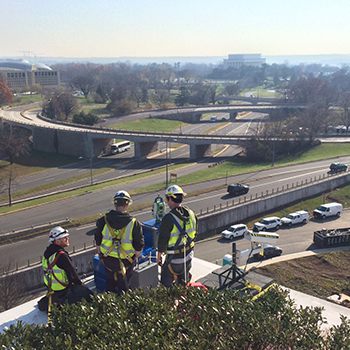
Installed on the roof of the Kennedy Center, this AMTS monitored the Roosevelt Bridge and SEO for the new buildings.
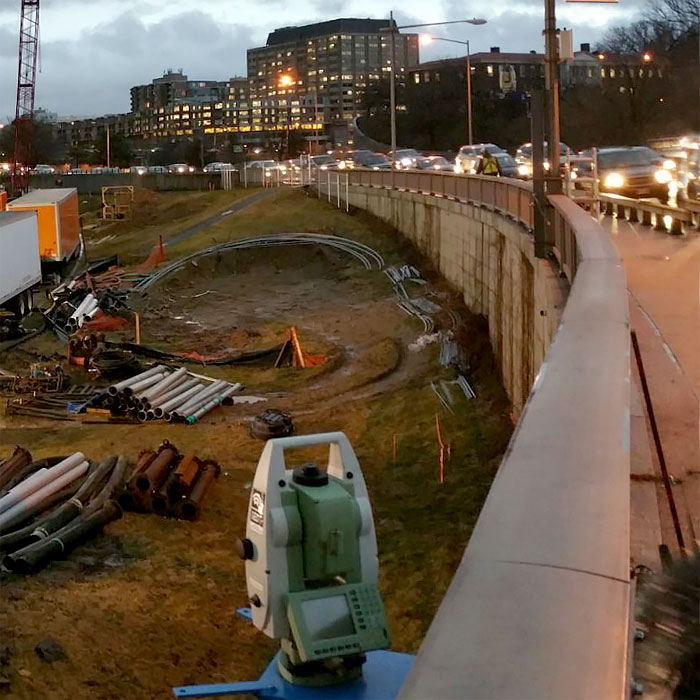
As work progressed, another AMTS was installed on the ramp for the Roosevelt Bridge looking into the excavation.
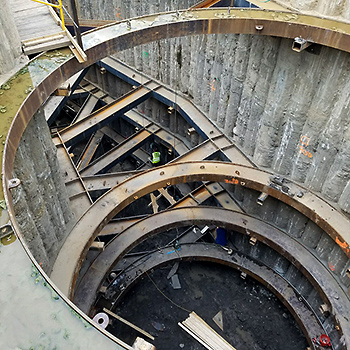
A GEO technician in a safety green vest, visible in the center of this photo, was installing another AMTS.